

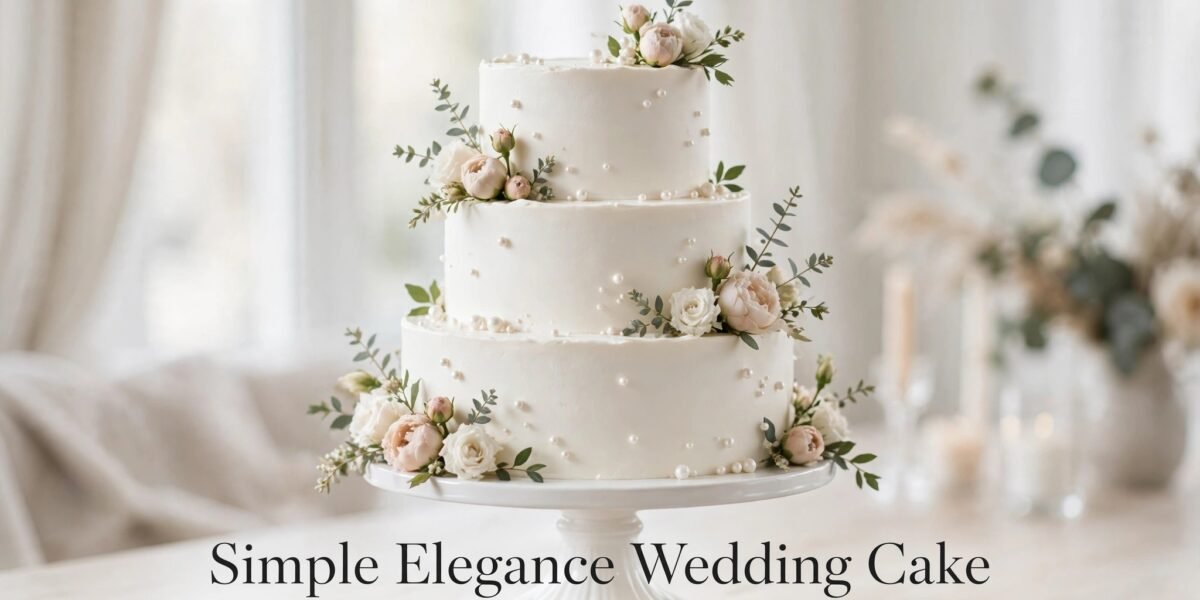

A simple elegance wedding cake combines homemade vanilla cake, smooth white icing, creamy buttercream, and delicate hydrangea decorations. Its three-tier design creates a beautiful centerpiece for weddings and special celebrations without complicated decorating techniques.
Relevant : The Best Chocolate Mayonnaise Cake Recipe
Prepare each tier carefully, allow enough time for cooling and icing, and use proper supports when stacking the cakes.
You Will Need
Cake and Icing Ingredients
- 5 times the ingredients for Easy Vanilla Cake.
- 5 times the ingredients for Basic Vanilla Buttercream.
- 340 g (12 oz) strawberry jam, optional.
- 340 g (12 oz) apricot jam, warmed and sieved.
- 4 kg white ready-to-roll icing.
Equipment and Decorations
- 15 cm, 23 cm, and 30 cm round cake boards.
- One 40 cm thick round cake board.
- Cocktail sticks, palette knife, baking parchment, cake lifter, and icing sugar.
- String, eight long plastic dowels, kitchen scissors, and a rolling pin.
- 3.5 m of 1.5 cm-wide white satin ribbon and UHU glue for external ribbon decoration.
- 12 cm and 15 cm polystyrene cake dummies.
- Approximately 20 lengths of 18-gauge floristry wire, each 10 cm long.
- 15–20 white and pale green hydrangea flower heads.
- Cake boxes for transporting the tiers.
Method
Step 1: Making the Cakes
Prepare the vanilla cake mixture according to the original recipe. Bake the tiers separately, cool completely, and apply the syrup as directed. Cakes can be baked ahead and frozen without icing.
Step 2: Bake the Bottom Tier
Triple the cake mixture and pour it into a lined 30 cm round tin. Bake for approximately 2 hours and 15 minutes at the temperature specified in the base recipe. Prepare four times the syrup quantity for all three cakes.
Step 3: Bake the Middle and Top Tiers
Double the cake mixture and divide it between lined 15 cm and 23 cm tins, filling each about two-thirds full. Bake the smaller cake for approximately 1 hour and 15 minutes and the larger for 1 hour and 30 minutes. Check that both are fully cooked.
Step 4: Layer and Cover the Cakes
Prepare five times the basic buttercream recipe. Allocate approximately 400 g for the smallest tier, 600 g for the middle tier, and 1.3 kg for the largest. Level each cake and carefully slice it horizontally into three layers.
Step 5: Fill the Cake Layers
Spread buttercream between the layers, adding strawberry jam if desired. Reassemble each cake, brush the outside with warmed, sieved apricot jam, and remove loose crumbs.
Step 6: Apply the Buttercream
Cover the top and sides of each tier with the remaining buttercream, smoothing it with a palette knife. Leave the cakes overnight if necessary, following suitable storage requirements.
Step 7: Cover the Cake with Icing
Use approximately 500 g icing for the 15 cm tier, 1 kg for the 23 cm tier, and 1.7 kg for the 30 cm tier. Knead the icing, roll it into a circle large enough to cover each cake, and carefully position it using a rolling pin.
Step 8: Smooth and Trim the Icing
Smooth the icing over the top and sides, easing out folds. Trim the excess level with the cake board and gently polish the surface with your hands.
Step 9: Cover the Base Board
Brush the 40 cm base board lightly with cooled, boiled water. Cover it with rolled icing, trim the edges, and leave the board and cakes to dry overnight.
Step 10: Stacking the Cakes
Use plastic cake dowels to support the tiers and polystyrene dummies to create decorative spaces for the flowers. Measure the supports carefully to keep the cakes level.
Step 11: Position the First Dummy
Center the 15 cm dummy on the largest cake. Insert four dowels around it in a square, pushing them down to the cake board. Mark the height of the dummy on each dowel.
Step 12: Cut and Replace the Dowels
Remove the dowels, cut them to the marked height, and return them to their original holes. Repeat the process for the middle tier using the 12 cm dummy.
Step 13: Finish the Base
Center the largest cake on the covered base board. Attach the white satin ribbon around the outside of each cake board, keeping glue away from edible surfaces. Box the tiers securely if transporting them to the venue.
Step 14: Prepare the Hydrangeas
Trim the flower stems to approximately 2–3 cm and separate a few smaller blooms to fill gaps. Reserve one attractive flower for the top. Hydrangeas are not edible, so use appropriate food-safe flower picks or barriers to prevent contact with the cake.
Step 15: Stack and Decorate the Cake
Arrange the flowers around the dummies to create two decorative rings. Carefully place the middle and top tiers onto their supports without crushing the petals. Fill gaps with smaller blooms and finish with the reserved flower.
Step 16: Cutting the Cake
Cut the cake into a grid of rectangular portions measuring approximately 2.5 × 5 cm. The original recipe estimates 50 servings from the bottom tier, 30 from the middle, and 12 from the top. Actual servings depend on cake height and portion size.
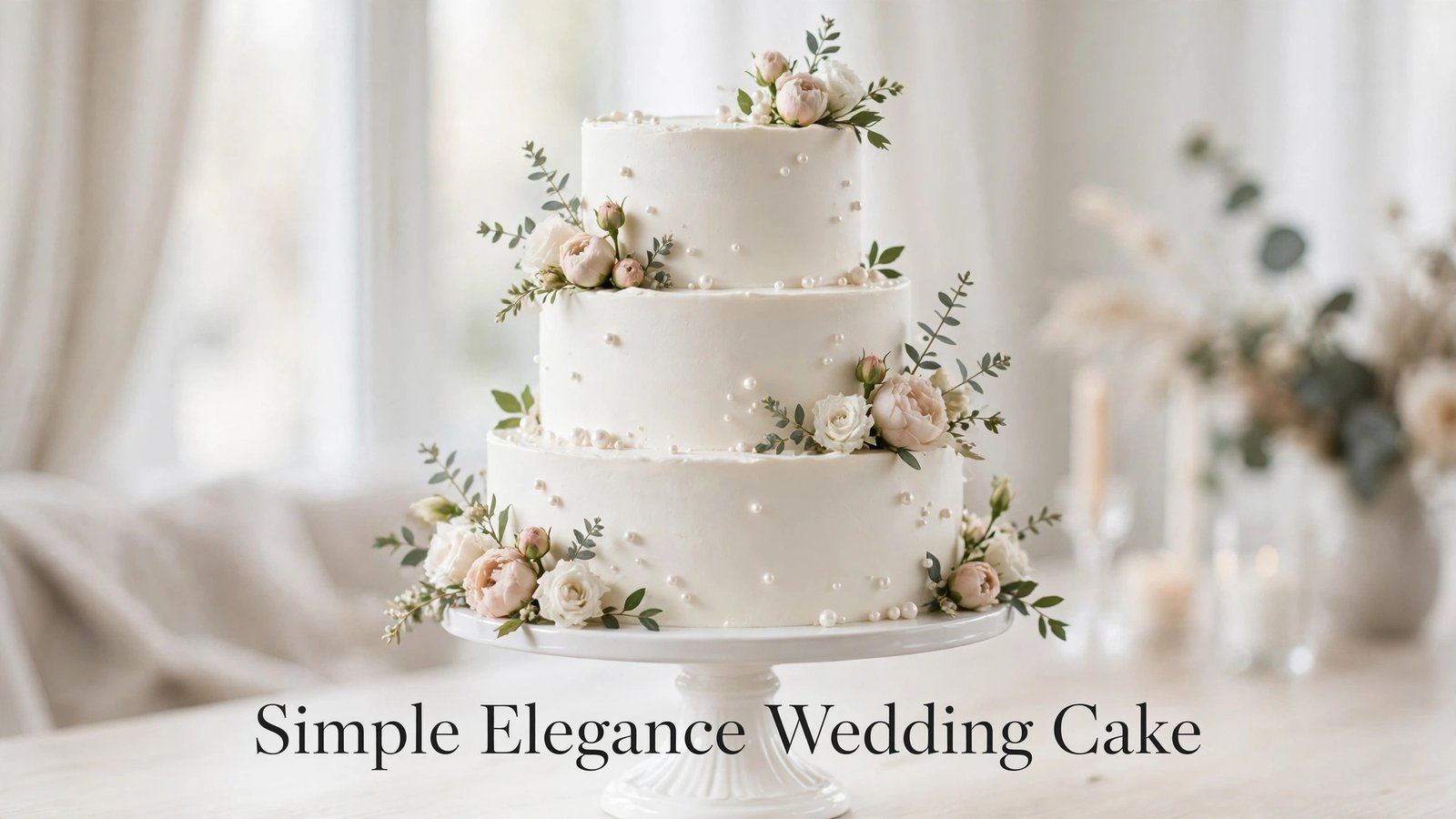
Table of Contents

Other Articles

Homemade French Bread Pizza – Ready in Just 45 Minutes
The Best Chocolate Mayonnaise Cake Recipe (Moist & Fudgy)
[…] Relevent : Simple Elegance Wedding Cake […]